Start Here
A guided path through beauty, tradition, art, architecture, books, cities, and civilizational memory.
New to Culture Explorer? Begin here. This page gives you the clearest path into the project: the mission behind the work, the essays that explain the argument, the masterpieces every cultured person should know, and the cities where civilization still speaks through stone, paint, and memory.
The Mission and the Movement
Culture Explorer exists to defend beauty, tradition, and civilizational memory in an age that forgets all three. The publication argues that great art, architecture, religion, history, and inherited standards are part of what makes human life meaningful, serious, and worth preserving. Beauty gives a civilization visible standards. Tradition gives people a memory larger than the present moment. Civilizations survive when they remember what made them worth building in the first place. Through essays, visual threads, travel guides, and ebooks, Culture Explorer documents what made cultures endure and what caused them to decay.
Read more about the mission
Begin With These Five Essays
These essays introduce the central ideas behind Culture Explorer: beauty, memory, civilization, art and architecture, and the standards that shape human life.

Can a Good Person Survive a Corrupt Society?
What A Man for All Seasons and 1984 Reveal About Conscience, Betrayal, and the Cost of Staying True
Read essay →
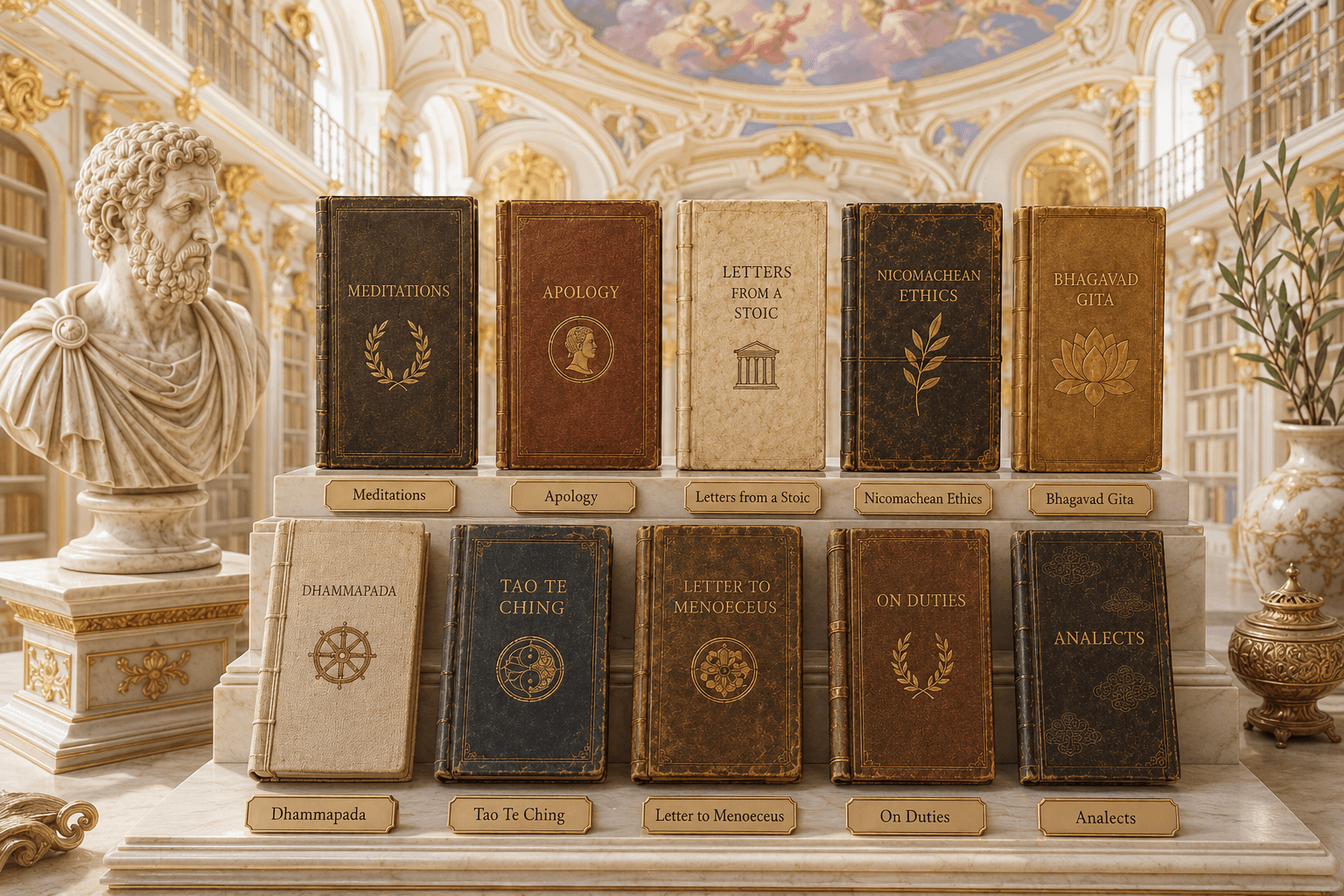
10 Ancient Books Every Student Should Read Before High School Ends
Modern self-help begins where ancient wisdom already went deeper.
Read essay →

How to Raise Children Who Recognize Beauty
Five Forces That Shape Your Children’s Sense of Beauty
Read essay →
Why Obsession Always Beats Talent
A Culture Explorer essay on discipline, attention, and the deeper force behind mastery.
Read essay →

15 Mothers Who Shaped Civilization
The mothers behind history’s giants
Read essay →
Open the newsletter archive
Nine Masterpieces Everyone Should Know
These works are entry points into the Culture Explorer museum. Each one reveals how beauty, faith, myth, courage, grief, and genius shaped the civilizations that made them.

Sculpture
Michelangelo’s David
Michelangelo Buonarroti
1501–1504
Galleria dell’Accademia
Michelangelo shows David before the battle, alert, tense, and focused. The enlarged hand, concentrated gaze, and coiled body symbolize will, courage, and moral readiness. In Florence, the sculpture became more than a biblical hero; it became an image of republican defiance.

Sculpture
Nike of Samothrace
Unknown Greek sculptor
c. 200–190 BCE
Musée du Louvre
Nike stands as if descending onto the prow of a ship, with wind driving her drapery against the body. The missing head and arms do not weaken the work; they intensify the force of motion and make victory feel larger than the figure. The sculpture symbolizes triumph, divine arrival, and naval power.
Sculpture
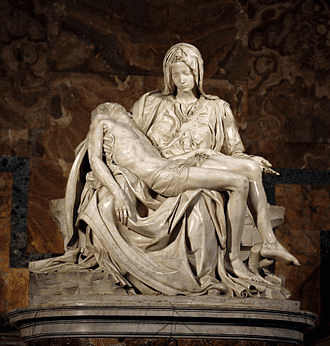
Michelangelo’s Pietà
Michelangelo Buonarroti
1498–1499
Saint Peter’s Basilica
Mary holds the dead Christ with grief held inside perfect composure. Her youthful face symbolizes purity, while the pyramidal composition gives suffering order and permanence. The polished marble turns mourning into devotion, making tragedy feel both human and sacred.

Sculpture
Gates of Paradise
Lorenzo Ghiberti
1425–1452
Museo dell’Opera del Duomo
Ghiberti’s gilded bronze doors present Old Testament scenes with astonishing depth and narrative control. Perspective, varied relief, and luminous gold turn the Baptistery entrance into sacred history. The doors symbolize passage: from the city into the church, and from earthly life toward paradise.

Sculpture
The Abduction of Proserpina
Gian Lorenzo Bernini
1621–1622
Galleria Borghese
Pluto seizes Proserpina as her body twists away and his fingers press into her flesh. Cerberus marks the threshold of the underworld, while her tears make the myth physically immediate. Bernini uses marble to stage violence, resistance, and the terrifying passage into another realm.

Sculpture
Psyche Revived by Cupid’s Kiss
Antonio Canova
1787–1793
Musée du Louvre
Cupid bends over Psyche and wakes her with a kiss after her trial and collapse. The wings, embrace, and lifting bodies symbolize love restoring the soul. Canova’s smooth marble balances tenderness with ideal form, making emotion feel purified rather than uncontrolled.

Painting
The School of Athens
Raphael
1509–1511
Vatican Museums, Raphael Rooms
Raphael gathers the great thinkers of antiquity beneath an ideal Renaissance architecture. Plato points upward toward transcendent truth, while Aristotle gestures outward toward the world of experience. The fresco turns philosophy into a civic assembly, linking classical wisdom with the intellectual ambition of papal Rome.

Painting
The Birth of Venus
Sandro Botticelli
c. 1485
Uffizi Galleries
Venus stands on a shell as the winds carry her toward shore and a figure waits with a flowered cloak. The shell, sea, and ideal nude body turn beauty into a symbol of birth, desire, and divine grace. Botticelli keeps the myth delicate, making pagan beauty feel almost spiritual rather than merely sensual.
Painting
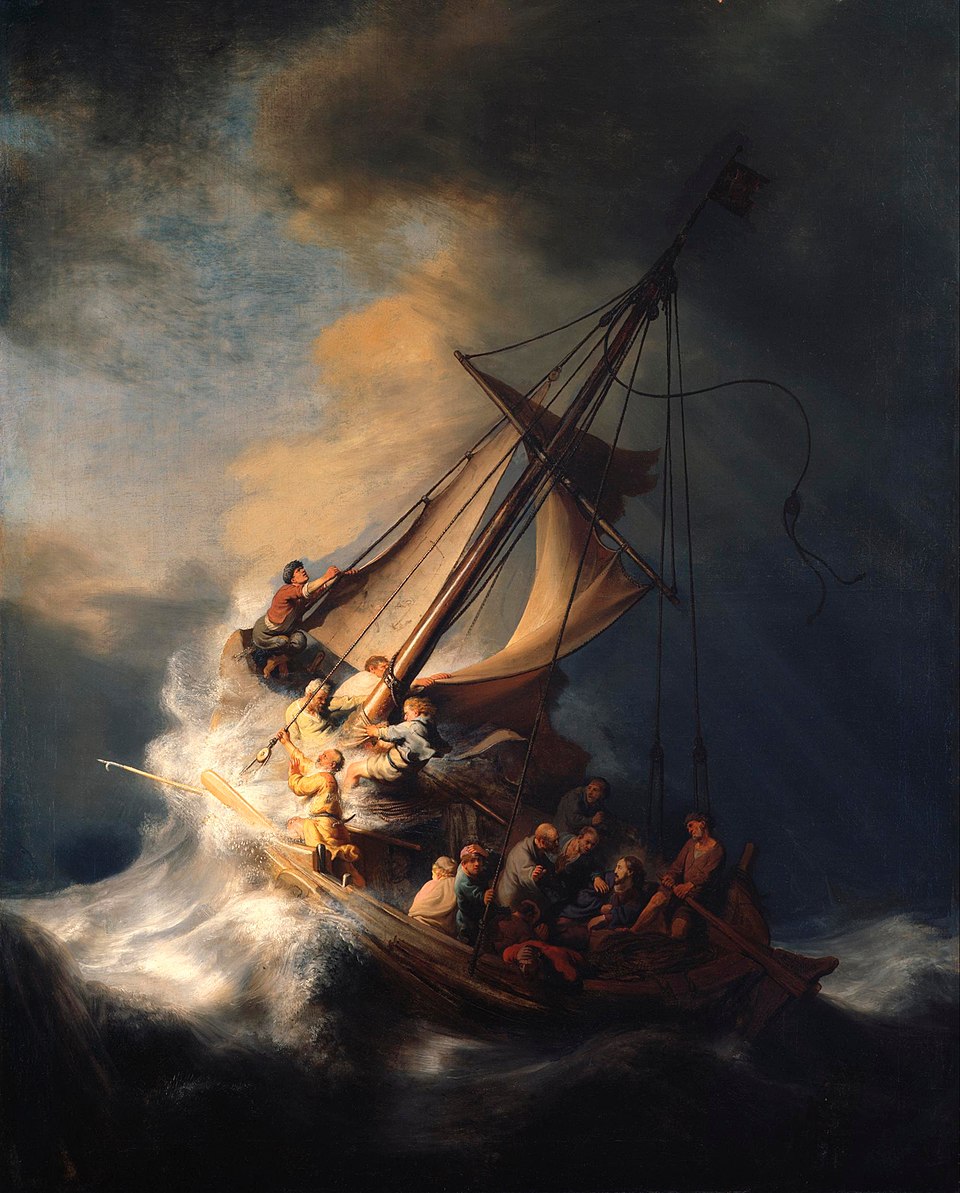
Christ in the Storm on the Sea of Galilee
Rembrandt van Rijn
1633
Isabella Stewart Gardner Museum collection; stolen in 1990 and currently missing
A fragile boat tilts under violent wind while Christ remains calm among terrified disciples. The storm becomes a symbol of fear, faith, and human weakness when the world feels beyond control. The painting was stolen from the Isabella Stewart Gardner Museum in 1990, which gives its drama an added wound in modern memory.
Enter the Museum